 April 11, 2026
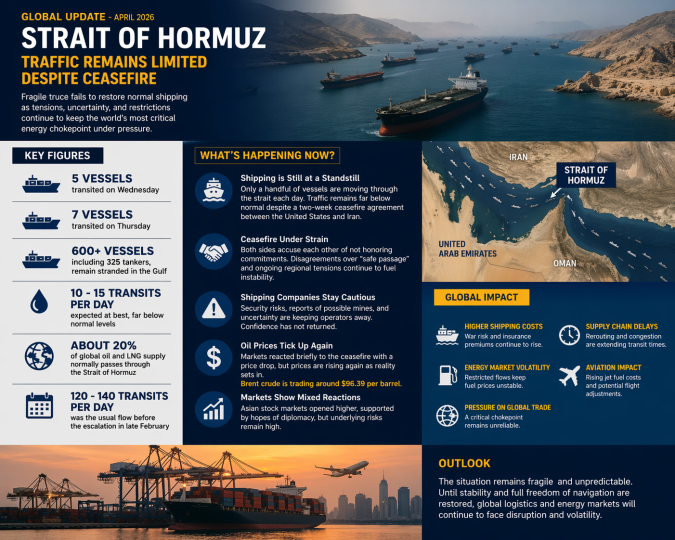
Shipping activity in the Strait of Hormuz remains extremely limited despite the recent ceasefire between the United States and Iran, reducing expectations for a quick resolution to one of the most significant global energy disruptions in recent history.
According to maritime tracking data, only a very small number of vessels have passed through the strategic waterway since Washington and Tehran agreed to a temporary two-week pause in hostilities earlier this week.
Even under a sustained ceasefire scenario, transit capacity is expected to remain limited, with only a small number of vessels able to pass through the waterway each day—significantly below normal operational levels.
Under typical conditions, the strait handles a substantial share of global energy flows, supporting daily vessel traffic in the range of over one hundred transits. Current figures remain well below this benchmark.
Tensions between key stakeholders remain elevated, with both sides raising concerns about compliance with the ceasefire terms. The agreement included provisions aimed at ensuring safe maritime passage through the strait; however, implementation has been inconsistent.
Diplomatic exchanges have intensified, with accusations and counter-accusations highlighting the fragile nature of the truce. Regional dynamics continue to add complexity, further delaying confidence in a full reopening of the corridor.
Industry experts describe the situation as highly uncertain, noting that shipping operators remain hesitant due to security alerts and the potential risks associated with navigation in the area.
Global energy markets have responded cautiously. After an initial drop following the ceasefire announcement, oil prices have started to rise again as it becomes clear that shipping activity remains restricted.
Market sentiment reflects ongoing concerns, with analysts emphasizing that the strait is not functioning under normal conditions. Access remains controlled and subject to various constraints, limiting the free flow of goods through this critical route.
At the same time, financial markets have shown mixed reactions. Some major Asian indices have recorded modest gains, driven by optimism surrounding diplomatic efforts, although underlying risks remain.
The continued disruption is affecting supply chains worldwide:

 Search
 inquiry@ibtslogistics.com